THE ROOM
Small, unventilated rooms collect it
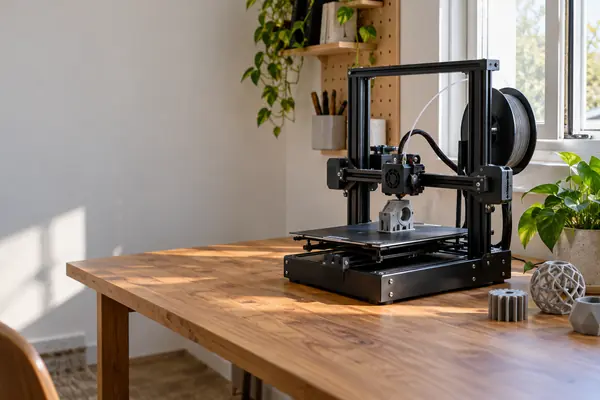
In one study a single print in a large, well-ventilated office did not significantly raise particle or vapour levels, but in a small, unventilated room they were readily detectable.
See the numbers doodleextruder
WHAT THE STUDIES MEASURED
A 3D printer makes more than the model.
Compare controls
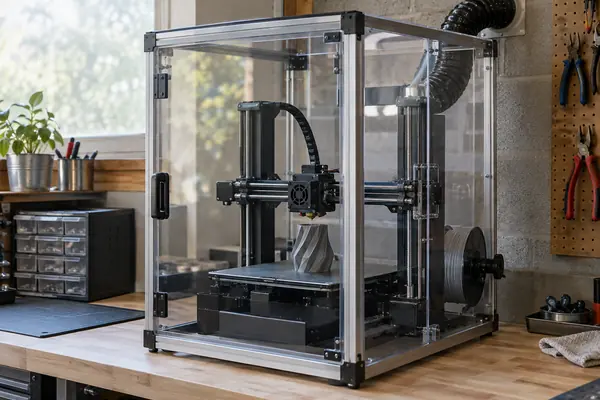
ENCLOSE ITand give the room air
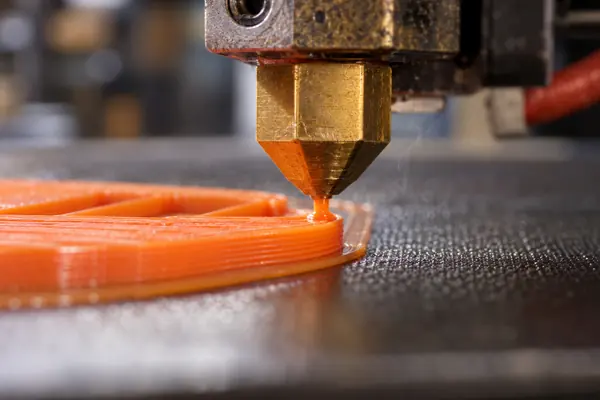
As the extruder melts plastic filament, desktop printers release ultrafine particles and volatile organic compounds into the room. Researchers have measured how much, and which simple controls make the biggest difference.
Updated
THE SHORT ANSWER
Studies point to three things that change
how much reaches the air you breathe.
THE ROOM
In one study a single print in a large, well-ventilated office did not significantly raise particle or vapour levels, but in a small, unventilated room they were readily detectable.
See the numbersTHE NOZZLE
Emissions varied mainly with filament material. ABS released styrene, nylon-based filaments caprolactam, and PLA smaller amounts of lactide, in a five-printer study.
Practical stepsTHE ENCLOSURE
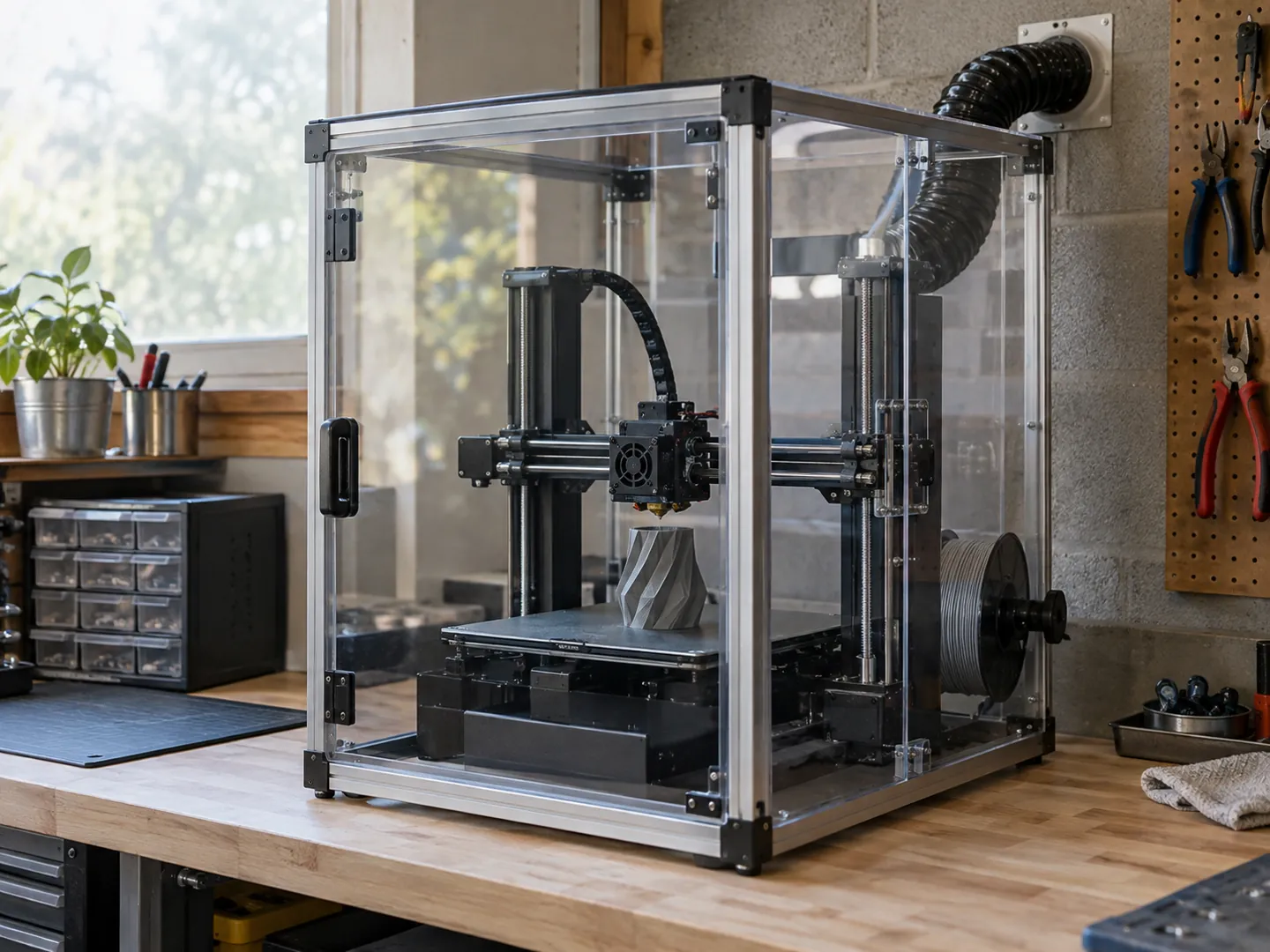
In a Finnish office study, a retrofitted enclosure cut nanoparticle emissions by 89%, and 96% when connected to local exhaust ventilation.
Compare controlsA QUICK CONTROLS CHECK
Pick a control measure to see what published studies found. The bar shows how much it reduced particle emissions.
Results come from different studies with different printers, rooms and measures, so they are a guide, not a guarantee for your setup.
TWO NUMBERS WORTH KNOWING
One range for how much printers emit,
one for the best control tested.
10⁸–10¹¹
Ultrafine particles released per minute
Median emission rates across five printers and up to nine filaments, varying mainly by filament material and, to a lesser extent, bed temperature.
EMISSIONS · AZIMI ET AL. 2016
96%
Cut with enclosure plus exhaust
Reduction in nanoparticle emissions, based on surface area concentration, in real office conditions.
CONTROL · VIITANEN ET AL. 2021
In a small unventilated room, one study found a vapour from PLA printing still detectable 20 hours after a 165-minute print (Steinle, 2016).
FOUR STEPS FROM THE RESEARCH
Researchers recommend a hierarchy of controls: printer design first, then ventilation, then choices such as filament.
Emissions built up in a small unventilated room but not in a large, well-ventilated office in Steinle's study.
Where the printer has a cover, using it halved total particle emissions in Yi and colleagues' tests.
A retrofitted enclosure cut nanoparticle emissions by 89% in office tests, and more with exhaust ventilation.
Filament type and even colour changed emissions. Studies advise caution with many printer and filament combinations in poorly ventilated spaces.
WHAT IS IN THE AIR
Steinle found the ultrafine aerosol was mainly volatile droplets, with some small iron-containing and soot-like particles. Styrene made up more than half of the vapours from ABS, while methyl methacrylate was the main one detected from PLA.
Emission rates also rose with prolonged use of the same printer: by a factor of 2 with PLA and 4 with ABS after seven months of occasional use. In workplace studies, measured personal exposures were below NIOSH limits, though the authors noted this does not cover every situation.
Questions
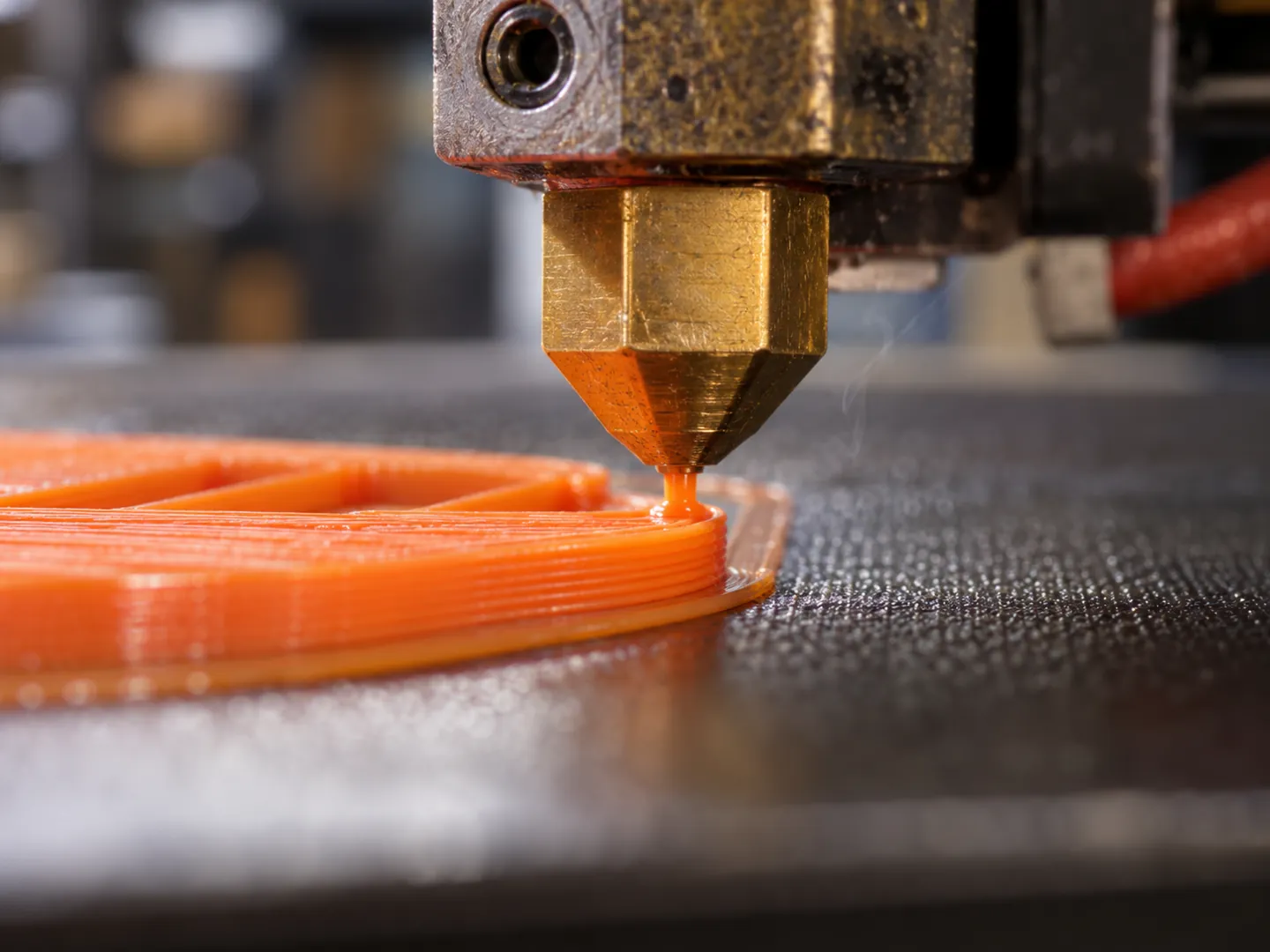
Studies show desktop printers that extrude melted filament release ultrafine particles and volatile organic compounds. One study measured median particle emission rates from about 10⁸ to 10¹¹ per minute, depending on the setup.
Not simply. In one study PLA released more ultrafine particles per minute than ABS, while ABS released styrene. Another found ABS released larger particles. Filament type and colour both changed emissions.
Room ventilation helps compared with a small closed room, but an office study found general ventilation alone was not sufficient for regular or long-time printing.
In one study, a retrofitted enclosure reduced nanoparticle emissions by 89%, rising to 96% with local exhaust ventilation. Another found a printer's cover halved total particle emissions.
One study found emission rates rose after seven months of occasional use, by a factor of 2 when printing PLA and 4 with ABS.
ABOUT THIS NAME
doodleextruder.com is part of the DoodleSale portfolio. It isn't in an auction right now, but you can ask about leasing it.